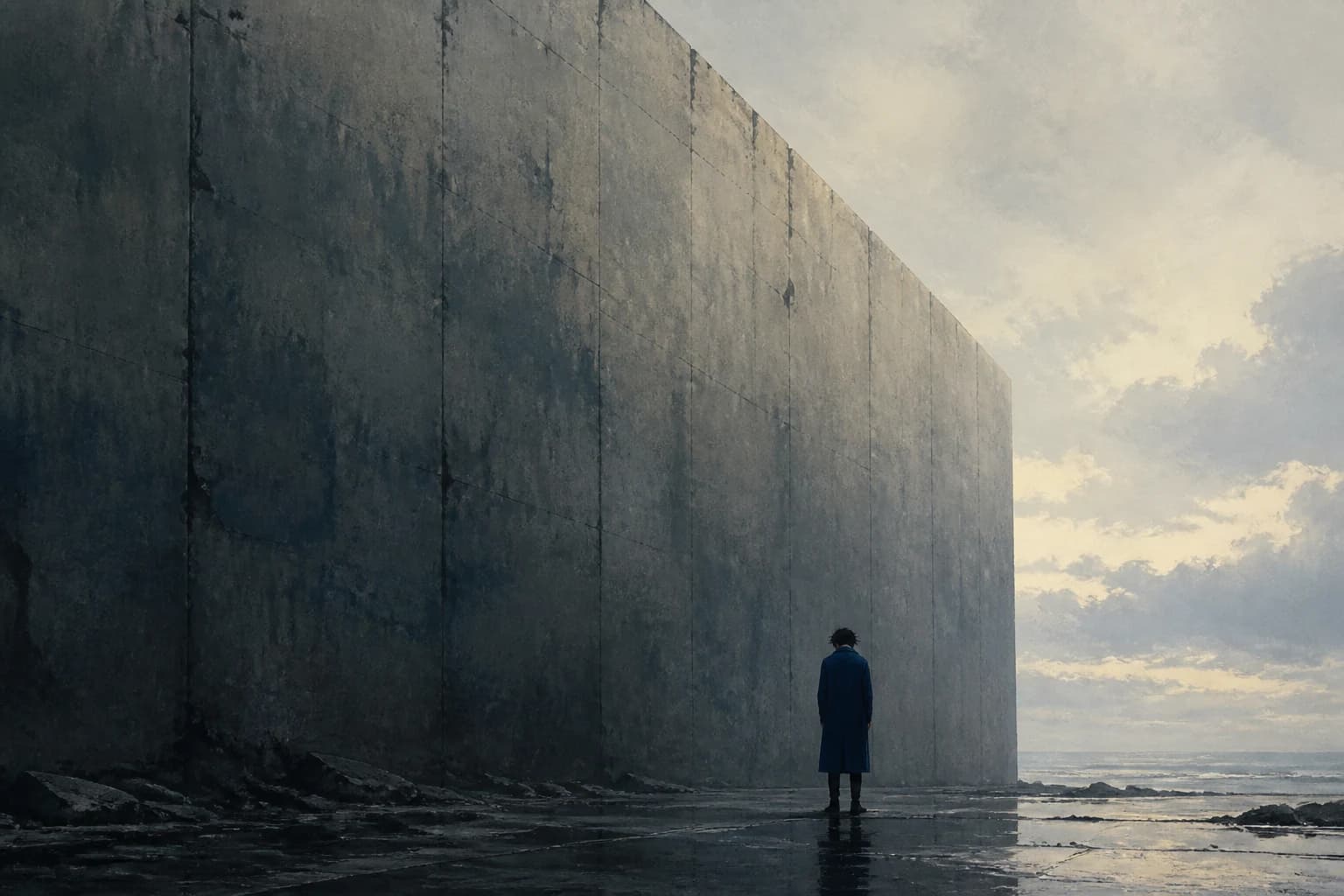
A daunting wall blocking my way is more bearable than I might think. I can climb it, break it down or take a long detour; somehow, there is something I can do. It is a physical obstacle, something to overcome, and sometimes even a clear goal that awakens my desire for a challenge. What truly frightens me, however, is the moment something inside me snaps in front of that solid wall. That fleeting instant when the world remains exactly as it was, but the only pillar holding me up collapses without a sound.
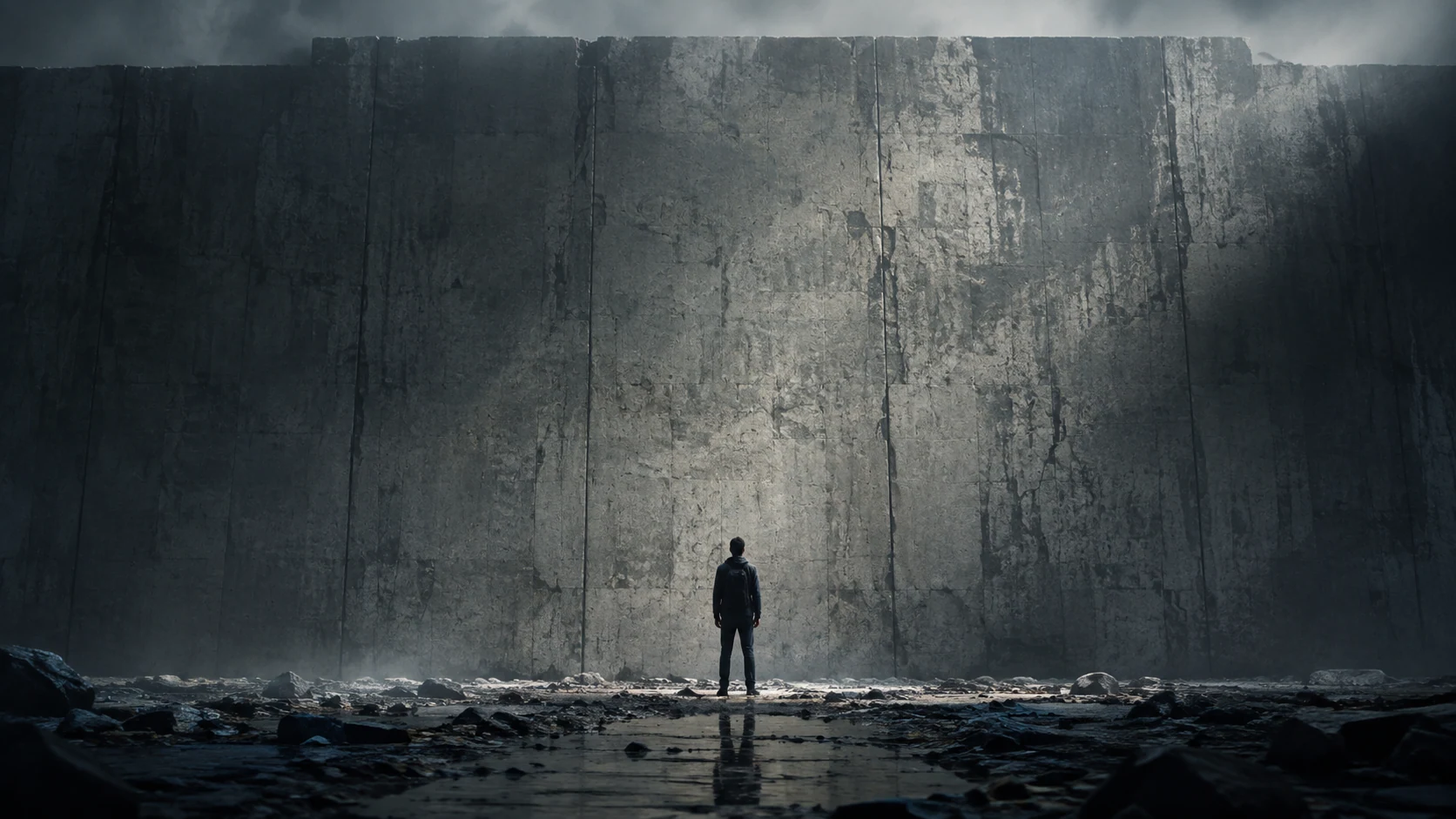
What I faced was not a wall, but my own limits.
🧱 The Silent Wall and the Dry Firewood
Everyone eventually encounters a massive wall. For some, it arrives as a failure that seems impossible to recover from; for others, as a separation that cuts to the bone; and for still others, as a deep emptiness with no discernible cause. The wall is so high and cold that merely looking up at it or touching it feels overwhelming. Rough, coarse concrete, the chill running over it, and a vast darkness that swallows my small shadow in an instant. Paradoxically, though, the wall itself cannot break me. It simply stands there in silence, bearing me no ill will. It neither criticizes nor mocks me. It merely exists.
The real problem lies in how I face that wall. Since childhood, I have lived by the belief that "nothing is impossible if you try." So whenever I meet a wall, my fists clench instinctively. "I have to get over it." "If I stop here, it is over." "Everyone else is so far ahead; I cannot be the only one falling behind." These compulsive incantations, whispered to myself without end, slowly begin to tighten around me. They are like the lash of a whip, cruelly driving an exhausted horse toward the edge of a cliff.
I was someone who felt reassured only after wringing myself dry. I was addicted to the comfort of saying, "I worked hard today," but only when sweat poured off me and I could barely breathe. I knew that what I called passion was really a precarious fire burning dry wood at a furious rate, yet I pretended not to know. Intoxicated by the brilliance of its flames, I looked away from the fact that the fire was consuming my life. Like a machine running on momentum, unaware its reserves were empty, I had forgotten how to stop and kept driving myself to the limit. That terrible habit was the real enemy, the one that left my soul most depleted.
We often celebrate passion. We call it beautiful to work through the night or study until our noses bleed. But standing alone in an empty field with a heart reduced to ash, I finally understand. What I called passion was a self-destructive flame, drawing the moisture out of my soul and burning it. Like dry logs crackling as though they were screaming, I had been evaporating every ounce of energy inside me just to produce the light the world demanded.
🛌 Dawn and Its Cold Paralysis
That is why I am afraid. Afraid that on some ordinary, quiet morning I will open my eyes and suddenly be capable of nothing except staring at the ceiling.
It comes without warning. Only the night before, I had filled my planner with things to do, thinking, "Tomorrow, I will do this." But the moment I wake, my whole body sinks under the weight of waterlogged cotton. The sharp vibration of the alarm beside my head strikes my eardrums, yet my body does not move, as if it has fused with the bed. Moving even a finger or a toe feels like lifting an immense weight.
The bluish light of dawn slipping through the window is almost cruelly beautiful. Dust dances in the beam between the curtains. Every quiet, minute movement imprints itself vividly on my retina. The world is already stretching to begin its day, while I alone remain rigid, excluded from the passage of time. My lips move, but no voice comes. In my head, I shout again and again, "Get up. Wash and go out. Do not be late." Yet my body refuses my commands, as though the link between will and flesh has been severed.
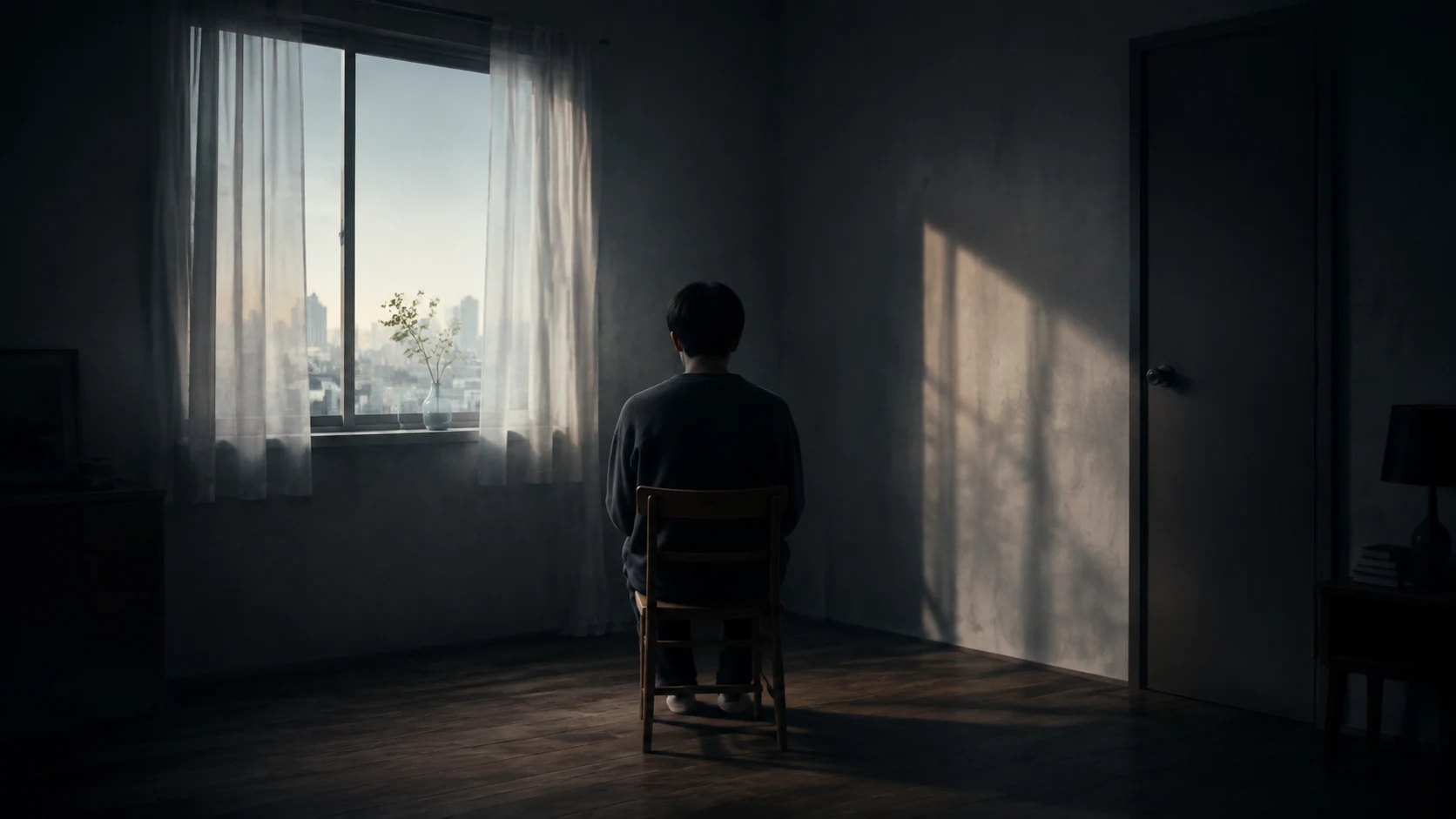
What makes this helplessness so frightening is the way it approaches, mocking my will. "Struggle all you want; you have reached your limit. You are finished." This cruel announcement, echoing from deep within my body, pushes me into a swamp of despair. The sounds of the world outside—the hurried footsteps of commuters, distant car horns, plates clattering in a neighboring home—become sharp arrows aimed at my stillness. Amid all that lively noise, I feel like the only frozen frame. It is a terrible alienation, a profound fear that I have become unnecessary to the world.
🔌 The Break, and a Quiet Turning Away
More frightening than any criticism is the quiet moment when my own heart turns its back on me and says, ‘I cannot do this anymore.’
If another person criticizes me unfairly, I can at least argue back. I can raise my voice and say it is a misunderstanding, that they have it wrong. There is at least a chance to fight, persuade or prove myself. But when my own heart turns away, even excuses are useless. This is not a rebellion that began overnight. It is the heart’s justified, cold strike against years of neglect and abuse, against the inner screams I dismissed with the words "I am fine." An expensive bill arrives all at once for every hour I dragged myself onward, saying, "Hold on a little longer," "I will rest when this project ends," and "Everyone lives like this."
The snap is not something the ears can hear. But I can feel it in the change of my heartbeat. It is like an overstretched rubber band finally passing its breaking point and losing its elasticity. Or a television screen flashing to black when its power cord is violently pulled out. A moment when all sound and color disappear, leaving only a monochrome silence. Paradoxically, what arrives then is a terrible peace. A resigned relief washes over me: I no longer have to keep trying—or rather, I am no longer even able to.
I sit in a chair in the middle of an empty room. Or I retreat into a corner of the room inside my mind. I can feel a door firmly closed behind me. Beyond it, the world is still busy and problems are piled high, but now they feel as though they have nothing to do with me. My heart has locked the door and will not open it.
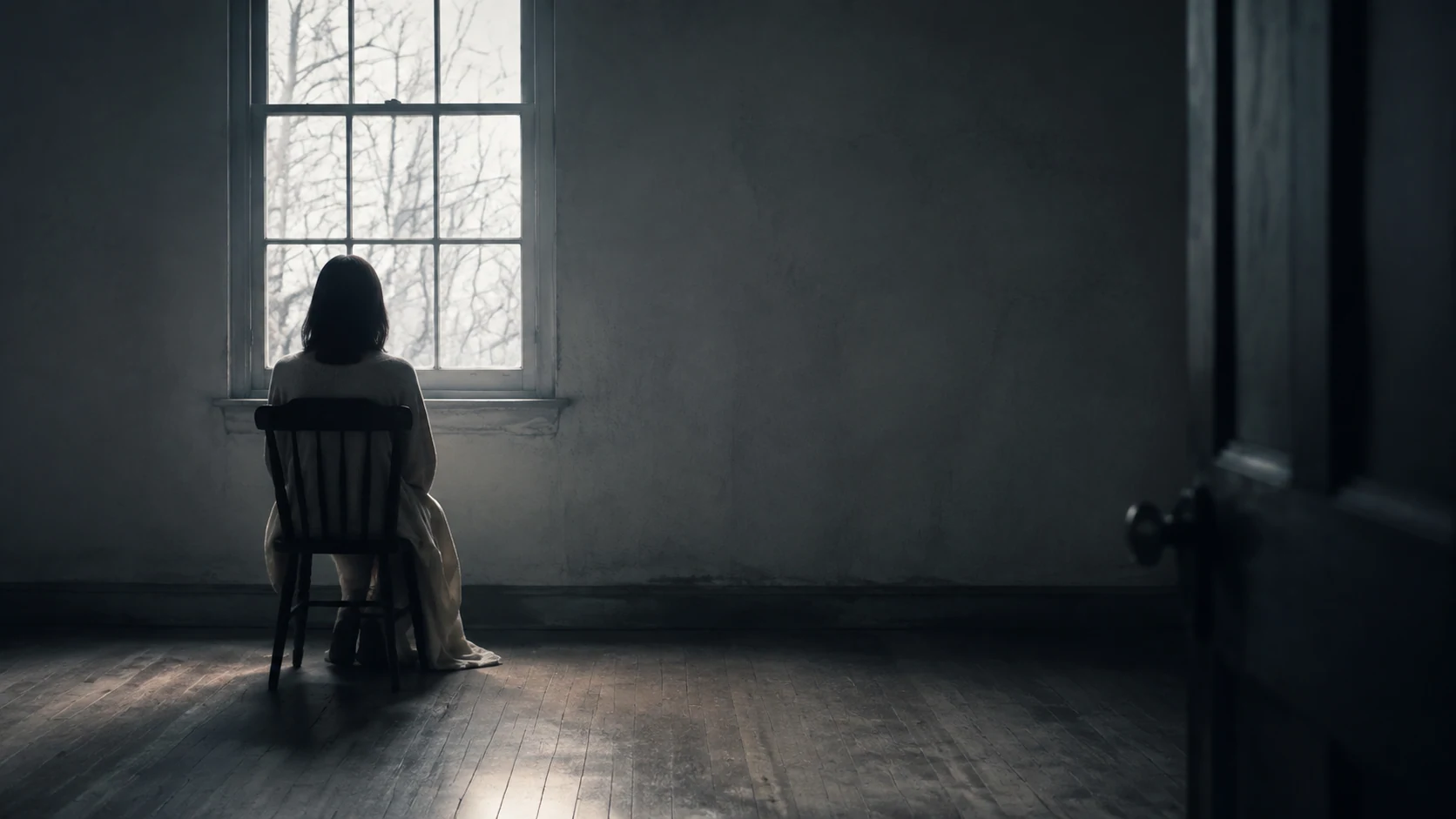
Only when my heart turned its back on me could I finally stop.
Perhaps we hold on until something breaks because we lack the courage to let go ourselves. We fear that if we release the rope with our own hands, we will fall forever; that the moment we let go, our very selves will shatter. That fear kept us clinging despite the blood on our palms and the rope cutting into our flesh. Ironically, though, it is where the rope breaks that we can finally set our feet on the ground and stand again. We realize that the place we thought was an endless fall was, in fact, solid ground. Falling can be more than an ending; it can be the work of preparing a foundation from which to fly again.
🕯️ Lighting a Fire for Myself Again
The moment I let go of myself is never the end of my life. It is a pause to extinguish the fire that was burning in the wrong way—for others, for achievement, for recognition—and to find warmth meant truly for me. It is time to brush away the white ash and water the dry, cracked earth.
I decide now to stop criticizing the self who stands still before the wall. Instead of raising a whip and asking, "Why is this all you can do?" I quietly sit down where I am. I feel the wall’s cold texture with my whole palm and breathe deeply of the cool, still air of uncertainty. If I cannot climb it, I can lean against it and rest. I can cry there for a long while, and if I fall asleep, I will let myself sleep without waking. If I cannot go around it, I can pitch a tent and stay for days. Until the wall disappears or becomes lower, or until I once again have the strength to cross it.
Even without wringing myself dry, even without running at the world’s pace, I am still someone precious. Just as a stopped clock tells the exact time twice a day, my stopped self is faithfully writing the most honest pages of my life. Now I let go of myself. And I hold myself in my arms. It is all right. Even if I pause for a while, the world will not collapse.
"Collapse is a chance to build again.
Only upon ruins that have fallen completely
can new flowers bloom."
Comfort for the person I am today