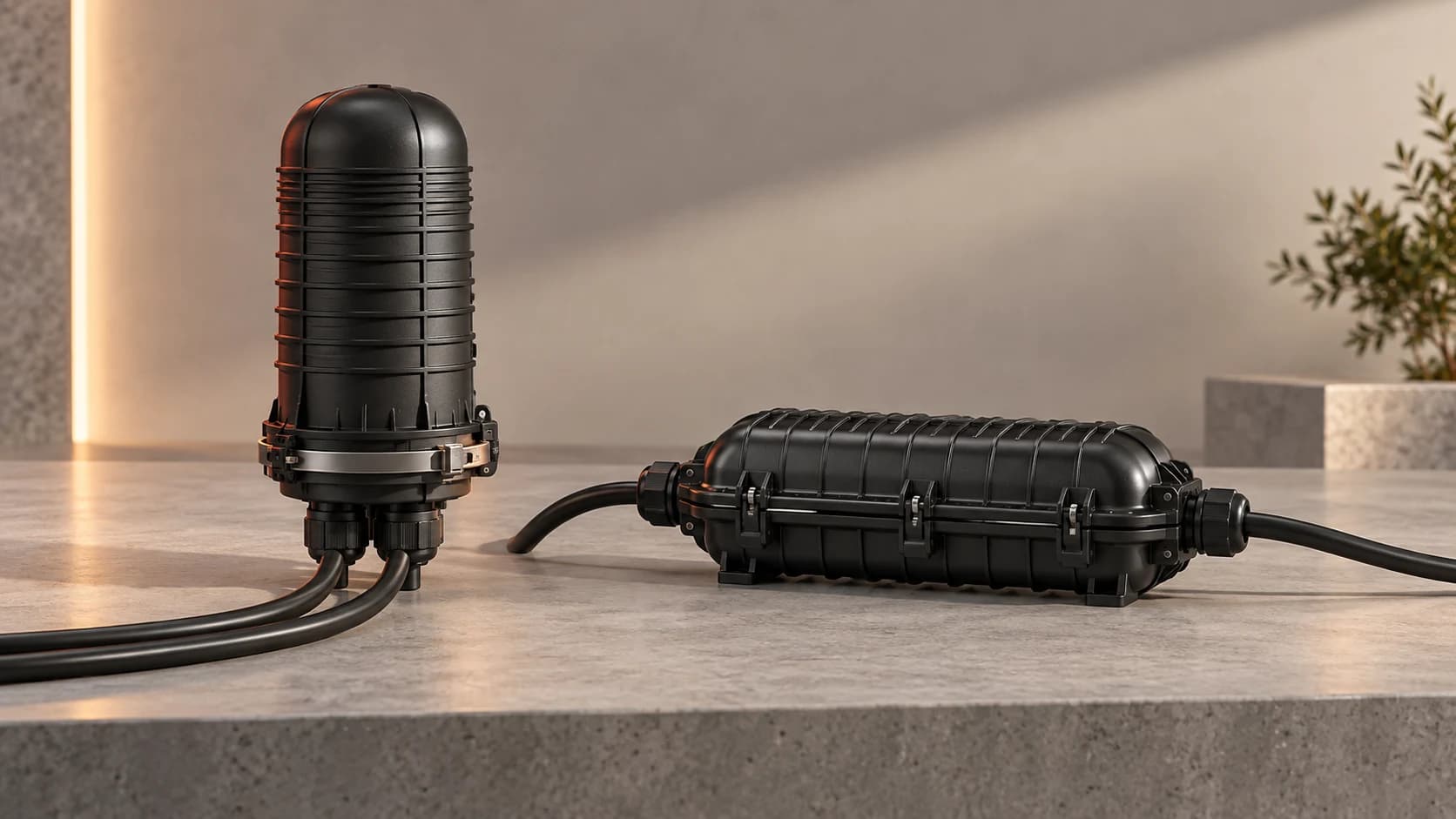
Which type of fiber optic closure is right for your site—dome or inline?
Splice capacity alone is not enough to make that decision. Cable entry direction, space for installation and splicing, future expansion, and maintenance requirements all need to be considered.
Here are three key areas to check.
① Installation Space and Cable Entry
Start with the cable route, entry direction, required bend radius, and mounting arrangement.
Having enough room to fit the closure is only part of the requirement. There must also be sufficient working space to open it and access the splice trays for installation, repairs, and future modifications.
 Concept illustration showing cable routes, service loops, and working space for opening a closureView original
② Capacity for Future Branching and Expansion
Consider future cable additions and splice requirements—not just the connections needed today.
Check whether spare cable entry ports are available, whether additional splice trays can be installed, and whether there is enough space to store fiber slack.
Available splice capacity does not necessarily mean there is room to add another cable.
③ Maintenance Access and Resealing
Check whether the required splice tray can be accessed without unnecessarily disturbing existing connections during maintenance or expansion.
Review the resealing procedure and the materials required. For sites where frequent re-entry is expected, consider the entire process—from opening the closure and completing the splice work to resealing it.
 Concept illustration of splice tray access, fiber slack management, a spare tray, and sealing materialsView original
Before selecting a closure, define the cable routing, working space, expansion plans, and maintenance requirements. Potential submersion, operating temperatures, and the network operator’s specifications also need to be checked.
Use these conditions to compare each product’s cable entry configuration, capacity, and installation and maintenance procedures. This provides a practical basis for choosing a dome or inline closure that suits the site.
Selection Criteria at a Glance
 Supplied VISSEM ELECTRONICS poster summarizing installation space, future expansion, and maintenance accessView original
The supplied poster retains its original wording and layout. The additional images are AI-generated concept illustrations, not specifications or installation instructions for a particular product. Consult the relevant product data sheet and installation guide before implementation.
#FiberOptics #FiberOpticClosures #FTTx #FiberOpticCable #TelecomInfrastructure